Home › Service Areas › Salt Ponds
Homes at Salt Ponds face the Chesapeake Bay directly — and the Bay sends salt with every onshore breeze. Gutter systems here are specified differently: enamel-finished aluminum or copper, stainless fasteners, and hangers rated for the wind that arrives with nothing between the house and open water.
Free estimates · Usually scheduled the same week
Salt Ponds is Hampton's gated waterfront and marina community, and its housing runs the full premium range — from condos listing around $299,000 to bay-front homes at $1.375 million and beyond, with median list prices near $475,000. What every one of those properties shares is exposure: the neighborhood fronts the Chesapeake Bay itself, and airborne salt reaches every roofline in the community, not just the first row of houses.
The corrosion mechanics are worth understanding before signing any gutter contract here. Salt-laden air deposits chloride on metal surfaces, and chloride is aggressive toward the zinc coatings on standard hardware — it strips galvanized protection and then attacks the steel beneath. That is why the first failure on a bay-front gutter system is almost never the gutter: it is the screws, the hangers, and the cut ends, rusting quietly while the aluminum still looks fine. A system that would deliver 20 to 30 years inland can come loose from the fascia years early because the fasteners gave out first. Galvanized steel gutters, for the same reason, are generally avoided within a couple of miles of the Bay entirely.
The materials answer is well established. Enamel-finished seamless aluminum — the baked factory finish sealing the metal against chloride — is the workhorse standard for new installation at Salt Ponds. Copper is the premium tier: rather than corroding, it develops a protective patina and delivers fifty-plus years of service, a spec that matches the ambitions of the community's waterfront architecture. The copper and half-round page covers that option in full, and the coastal materials guide walks through the science in more depth.
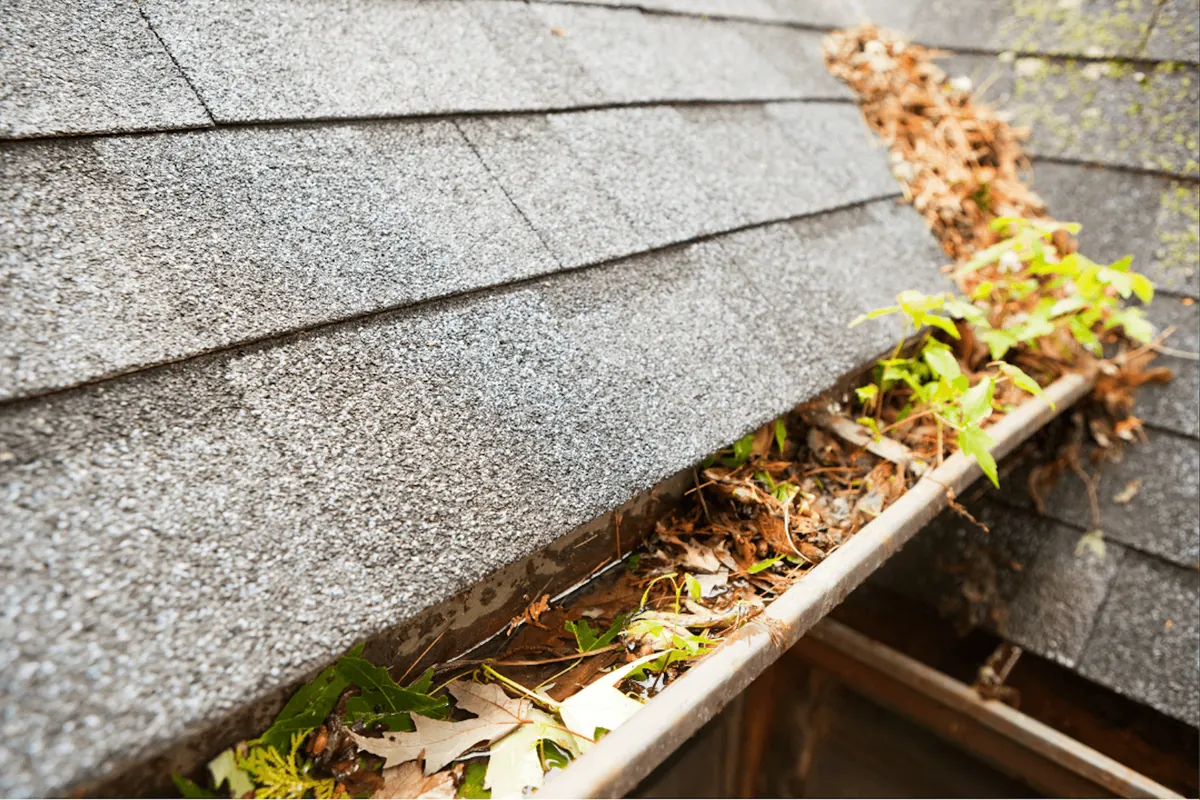
Direct Bay frontage also means direct wind. Nor'easters and tropical systems arrive at Salt Ponds with a full fetch of open water behind them, so mounting hardware matters as much as material. A quote for a home here should read differently from a quote for the same square footage inland — and the differences are specific:
Capacity belongs on that list too. The Peninsula's 47 to 50 inches of annual rain peaks in September, when tropical systems can deliver several inches in an afternoon, and a system that sheets over the front walk in every named storm is not finished — 6-inch profiles and oversized outlets are the standard answer on larger waterfront rooflines.
Fifty-plus-year copper systems that treat salt air as an asset — the patina is the protection — for the community's showcase waterfront homes.
Learn more →Salt-rated seamless aluminum, fabricated on-site and hung on stainless, wind-rated hardware sized for Bay-front exposure.
Learn more →Full tear-off and respecification for systems the salt got to early — the most common first project on Bay-facing streets.
Learn more →Stainless micro-mesh with coated frames — guard hardware has to meet the same salt-air standard as everything else on the roofline.
Learn more →Oversized 3x4 downspouts and drainage routing for flat coastal lots where roof water has nowhere to go on its own.
Learn more →Post-storm inspections and corrosion-point repairs — catching fastener failure before a nor'easter finishes the job.
Learn more →Mon–Fri 7AM–9PM · Serving Salt Ponds & the Hampton waterfront
A pattern on Bay-front streets: gutters installed with standard hardware look flawless for a few years, then rust streaks appear below every hanger point — the zinc-plated screws corroding inside the fascia. Owners who rebuilt with stainless fasteners and enamel-finished runs describe it as the difference between repainting trim every few years and forgetting the gutters exist.
The habit experienced waterfront owners share: after any named storm, walk the house and sight down every gutter run. Wind off open water works fasteners loose incrementally, and a run that has pulled a quarter-inch from the fascia is a cheap fix that season — and a torn-off system the next. Wind-rated hangers stretch the interval between findings considerably.
Enamel-finished seamless aluminum is the practical standard — the baked finish resists salt-air corrosion far better than bare or galvanized metal, which is generally avoided this close to the Bay. Copper is the premium option: it forms a protective patina instead of corroding and routinely delivers fifty-plus years of service, which suits the caliber of Salt Ponds' waterfront homes. Either way, the fasteners should be stainless steel.
Shorter than inland, unless the materials are specified for the exposure. Aluminum systems that run 20 to 30 years inland can fail early on unprotected bay-front homes because salt air attacks the fasteners and cut edges first. Salt-rated specification — enamel-finished aluminum or copper, stainless hardware, sealed terminations — is what pushes a waterfront system back toward its full design life.
Yes, on two counts. Salt air corrodes standard zinc-plated screws and hangers years before the gutter itself fails, so stainless fasteners are the baseline. And direct Bay exposure means the wind loads of nor'easters and tropical systems arrive with nothing to slow them down, so wind-rated hidden hangers at tightened spacing are the difference between a system that stays on the fascia and one that peels.
More questions? Visit the full FAQ or call (757) 801-2559.
The same salt-air logic applies up and down Hampton's Bay coast — see the Hampton homepage for full Peninsula coverage.
Call for a free, no-obligation assessment — material options, hardware spec, and a written figure matched to the home's actual exposure.
(757) 801-2559Hours: Mon–Fri 7AM–9PM